

Latitude Scuttlebutt

The New England Catamaran Market: What Today’s Buyers (and Sellers) Need to Know 600 259 Dave Bennett

The New England Catamaran Market: What Today’s Buyers (and Sellers) Need to Know

Why Catamarans Are No Longer “The Exception” in New England

One of Latitude’s brokerage catamarans for sale

One of Latitude’s brokerage catamarans for sale

For decades, catamarans in New England have been a rarity.  Tight marinas, narrow travel lifts, and a sailing culture built around monohulls kept multi-hulls on the fringe. That reality is now starting to change.

In a recent industry discussion with Matt Leduc and Ryan Miller of Latitude Yacht Brokerage, we talked about how the catamaran market is growing, how marinas are investing in infrastructure to deal with that growth and how the cat boating experience is different.

On the infrastructure side, marinas have widened pits and upgraded lift capacities to handle boats with wider beams. There are now at least 3 boatyards in RI who can accommodate most catamarans. That number is expected to grow.

The Modern Catamaran Buyer: A Different Mindset

Buyers who once assumed “cats belong in the Caribbean” are now realizing they can fit into a Northeast cruising lifestyle

Many New England cat owners now follow a north-south rhythm. Summers in New England. Winters in Florida, the Bahamas, or the Virgin Islands. Instead of choosing one region, owners are building a lifestyle around mobility.

It’s also common to see clients owning two platforms: a local powerboat or monohull for weekend cruising in the northeast, and a catamaran positioned down south for extended winter escapes.

Another trend is treating the boat as a business asset. A majority of cat owners in the US place their vessels initially into charter programs. Done correctly, this approach can offset ownership costs, keep the boat professionally maintained, and give owners access to a managed base when they’re not onboard.

From a broker’s perspective, this changes the conversation. We’re not just discussing sail plans and layouts. We’re talking about income strategy, long-term value, depreciation, and how a boat fits into a client’s broader lifestyle.

Catamarans vs. Monohulls: What Buyers Are Really Choosing

When buyers ask us why catamarans are gaining traction, the answer comes down to three things: space, independence, and comfort.

Space and Layout
A 40-foot catamaran feels dramatically different from a 40-foot monohull. Separate hulls create privacy for couples, guests, or family members. People can spread out, enjoy different areas of the boat, and avoid the “everyone in one salon” feeling.

Self-Sufficiency
Modern catamarans carry larger battery banks, expanded tankage, and extensive solar arrays. In New England, where mooring fields are common, this independence from dock power is a huge advantage.  A modern catamaran can spend all it’s time on a mooring without having to plug in all season in many cases.

Stability
Traditional sailors sometimes miss the heel of a monohull. Romping to windward, rail in the water, using the gimbals on the stove.  But for families, guests, and first-time cruisers, stability wins every time. Catamarans don’t heel.  Less motion often means more time enjoying the journey instead of managing discomfort.

Searching for a Catamaran: Think Beyond New England

One of the biggest adjustments for first-time cat buyers is geographic flexibility.

Unlike monohulls, which can often be sourced regionally, catamaran inventory tends to be spread across the Mid-Atlantic, the Caribbean, and even overseas. Buyers who limit their search to local listings risk missing the best opportunities.

We often remind clients that the right boat might be in St. Thomas, Panama, or France rather than Newport or Boston. The logistics can sound complex, but with the right brokerage guidance, delivery and commissioning become manageable parts of the process without adding a ton of expense.

New Builds and the Role of an Independent Advisor

Another shift we’re seeing is how buyers approach new construction catamarans.

Instead of simply walking into a dealership, many buyers now want an experienced broker acting as a buyer’s representative. That role includes helping clients evaluate equipment packages, make flagging decisions, charter options, and long-term ownership strategy while the transaction itself is completed through the authorized dealer network.

This model gives buyers an independent voice in a process that can feel overwhelming, especially when dealing with international builds and rapidly evolving technology.

We saw a need for this with our customer base in New England and our boaters in the Caribbean,  so in 2025 we entered into a partnership with Lagoon’s East Coast Dealership, Signature Catamarans. Through Signature, Latitude serves as an authorized sales center for new Lagoon Catamarans.  This provides us with a role as an independent advisor, helping buyers make the right decisions on equipment, outfitting, documentation, flagging, charter bases, income, and all those types of decisions that need to be made. This also effectively gives Lagoon an office and a presence in Newport RI with a brokerage that knows the area and has been in business in the Northeast for a long time.

2026 Lagoon 38 Catamaran

2026 Lagoon 38 Catamaran

For Buyers, Brokerage Cats can be a real opportunity

Used catamarans can be incredible values, but they require careful evaluation.

Many brokerage cats come out of Caribbean charter fleets. That means potential exposure to heavy UV, mold/moisture, and the occasional storm season. None of these factors automatically disqualify a boat, but they do make surveys and due diligence essential.

Here’s something that surprises a lot of buyers: charter boats are not always worse than private boats. In some cases, professional maintenance programs keep charter vessels in exceptional condition. The key is knowing which charter bases maintain their fleets well and which ones cut corners.

That’s where Latitude can offer real value, helping buyers separate perception from reality.

Selling a Catamaran in Today’s Market

For sellers, presentation and transparency matter more than ever.  It’s really not much different than selling any used yacht.

Our advice is simple:

  • Disclose known issues upfront
  • Stage and clean the boat thoroughly
  • Address minor maintenance items before listing

One thing that is different with brokerage cats is to highlight regional advantages if the boat has lived in New England all its life. Boats that have spent winters hauled out in the Northeast often show less UV damage and wear and tear than their southern counterparts, which can be a strong selling point.

Layout also plays a major role. Three-cabin owner versions typically attract private buyers, while four-cabin configurations appeal to charter investors.

The Technology Wave Changing Everything

Because their owners tend to have longer term occupancy of their cats (as opposed to weekend monohull cruisers), new technology is emerging every year and being piloted on cats.

Solar systems are becoming more powerful. Lithium battery banks are extending off-grid capability. Electric propulsion is moving from experimental to practical, often paired with diesel generators for redundancy.

For buyers who dream of anchoring for days without plugging in, these advances are game-changers. They also align with a broader shift toward sustainable and low-maintenance cruising.

Power catamarans are also entering the conversation, especially in larger charter markets. While sailing cats still dominate New England growth, power cats are gaining visibility as layouts evolve and demand increases.

The Big Picture: A Market That’s Growing Smarter

If you asked me ten years ago whether catamarans would become a major part of the New England landscape, I might have hesitated.

Today, the answer feels obvious.

Infrastructure is catching up. Buyers are thinking globally. Technology is making boats more capable than ever before. And the lifestyle appeal of multi-hulls continues to expand beyond traditional sailing circles.

This isn’t about replacing monohulls. It’s about expanding the conversation and giving buyers more options than ever before.

For anyone considering entering the catamaran market, the key is understanding that success starts with the right guidance. The boats are evolving, the market is evolving, and the smartest buyers are evolving with it.
The Power Yacht Brokerage Market in 2025: What Buyers and Sellers Need to Know Heading Into 2026 600 259 Dave Bennett

The Power Yacht Brokerage Market in 2025: What Buyers and Sellers Need to Know Heading Into 2026

The brokerage power yacht market in 2025 proved to be far more resilient and dynamic than many industry observers expected. Against a backdrop of economic uncertainty, tariffs on new boats, and lingering inventory challenges, well-positioned brokerage firms continued to see strong demand, particularly for quality, well-maintained yachts in the mid-size power segment (30’-70’ LOA boats).

To better understand what really happened in 2025 and what lies ahead, I spoke with  Ryan Miller and Matt Leduc, co-partners of Latitude Yacht Brokerage in Newport, Rhode Island. Latitude specializes in brokerage power yachts, primarily diesel-powered vessels in the 30- to 70-foot range and a variety of styles. Of course, their brokerage inventory and business includes sailboats as well.  Their insights from a combined 45 years in the yacht brokerage business offer a grounded, real-world look at how buyers and sellers behaved in 2025 and how expectations are evolving as the market moves into 2026. This post focuses on power yachts and summarizes our discussion.

2025: A Growth Year Driven by Brokerage Demand

From Latitude Yacht Brokerage’s perspective, 2025 was clearly a growth year. The firm reported a 16.5 percent increase in brokerage power yacht sales compared to 2024, a notable result given broader economic headwinds last year. This growth was all brokerage boats.

One of the primary drivers for this was the impact of tariffs on new boats. As the cost of importing new vessels rose, many buyers chose to avoid paying a premium and instead focused on boats already imported and available on the brokerage market. For buyers, brokerage yachts represented more immediate availability, fewer unknowns, and often significantly better value.

Brokerage boat inventory: Quality Matters More Than Quantity

The downside of this was increased pressure on brokerage inventory, particularly for clean, well-maintained boats that were realistically priced. Clean, well-maintained boats that are ready to be used tend to sell in almost any market. There are plenty of boats on the market, but unfortunately many require more work than their asking prices justify.

Days on Market and the Reality of Seasonality

One common misconception among sellers is applying real-estate logic to yacht sales. Days on market for yachts, particularly in the Northeast, are heavily influenced by seasonality.

The prime buying window in the Northeast US runs roughly from April through July, and there’s usually a second spike in September-October. Boats listed outside that window may still sell, but the frequency of buyer activity drops significantly. Missing that peak season can dramatically extend days on market, even for well-priced boats.

This seasonality underscores the importance of timing when listing a yacht for sale, especially for sellers hoping to achieve a quick transaction.

That said, Latitude does move boats during the winter months.  December 2025 was their busiest December in recent years, and January looks like it will be super busy as well.

Advice for Sellers of Older Power Yachts

For owners of older boats, preparation is everything. One of the strongest recommendations from Latitude is to invest in a pre-sale survey. (much of this advice is also applicable for newer models as well)

While buyers will always conduct their own surveys, a pre-sale survey allows sellers to identify and address potential issues before they surface during negotiations. This proactive approach can prevent unpleasant surprises late in the deal and help remove obstacles to closing.

Many sellers believe they have maintained their boats exceptionally well, and often they have. However, issues that only appear under survey conditions are frequently missed. Examples include moisture intrusion around deck hardware or cooling system components such as heat exchangers and after-coolers that have exceeded recommended service intervals.

Deferred maintenance is not always obvious during casual operation. Engines that are lightly used may never reach conditions that expose underlying issues, but a surveyor running the boat hard will often uncover problems that buyers cannot ignore.  For example, during sea trial they will run the boat at much higher RPMs than their owners will during cruising, and if there are engine cooling issues they will become obvious here.

Maintenance Records and Transparency

Maintenance records continue to play a critical role in buyer confidence, particularly as yacht values increase. Major engine service intervals, often at 1,000 hours or based on time rather than usage, are increasingly scrutinized by buyers. Boats lacking documentation for these services often face price adjustments or repair requests during negotiations.  We see many potential buyers walk away from boats before even seeing them if there are not good, documented service records available.

Many owners handle routine maintenance themselves, often recording only oil and filter changes (if you do your own maintenance PLEASE document that). This is not necessarily a negative, but transparency is essential. Buyers must weigh the cost savings of owner maintenance against perceived risk.

Advice for Buyers considering Older Brokerage Yachts

For buyers considering yachts from the 2010 era or earlier, realistic expectations are critical. Latitude advises buyers to view multiple boats to understand market norms and variations in condition and value.

No used boat is perfect. Buyers should budget an additional amount of capital, (say 5-10% of the purchase price) for post-purchase upgrades and maintenance, even on boats that appear turnkey. These costs are part of bringing a boat onto a new owner’s maintenance schedule and comfort standard. Remember, a boat built in 2010 and used in the Northeast has spent 15+ years in a saltwater environment. Even if well cared for that boat will very likely need some upgrades.

Structural integrity and major systems should always take priority over cosmetic concerns. Dirt, clutter, and outdated soft goods are far easier and cheaper to address than structural or mechanical deficiencies.

All this said, there are some great diamonds out there in the older boat market.  Latitude can help you find them.

Looking Ahead to 2026

The outlook for 2026 is optimistic. Latitude Yacht Brokerage reported an exceptionally strong 2025, fueling confidence in continued demand.

For newer boats but also older boats with recent upgrades, emerging technology trends include greater system integration, gyro-stabilization, increased automation, lithium battery upgrades, solar installations, and even electric propulsion. While many of these technologies originate in new builds, retrofits are becoming increasingly common.

As systems become more complex, the role of specialized surveyors is growing. Buyers considering boats with pods, lithium systems, or advanced electrical setups must ensure their surveyors have the appropriate expertise.

Final Thoughts

The brokerage power yacht market entering 2026 remains strong but will be increasingly nuanced. Buyers and sellers alike must approach transactions with realism, transparency, and informed expectations.  This is where your broker can help.

Please reach out and connect with us if you want to learn more.  We will have brokers at both the   Miami International Boat Show, as well as the Palm Beach Boat Show in the next couple of months and we’ll be walking the show floor as well as looking at brokerage boats in the area.

Good boats still sell. Deferred maintenance still matters. And there is no such thing as a perfect used yacht, only a well-chosen one.

Don’t Wait for Spring: Why Winter is Prime Time for Buying (and Selling) Boats in the Northeast 600 259 Dave Bennett

Don’t Wait for Spring: Why Winter is Prime Time for Buying (and Selling) Boats in the Northeast

One of the issues with boating in the Northeast is that the season is short. Basically from May to October (believe it or not, there are some yacht owners who launch the boat around Memorial Day and come out around Labor Day!).

So if you want to sell or buy a boat, most people believe that the windows are really tight. Like March to July.

It is true that the busiest part of the boat buying/selling season is during those months. But boats are bought and sold throughout the year in the Northeast! I’ve sold boats in October, November and December.

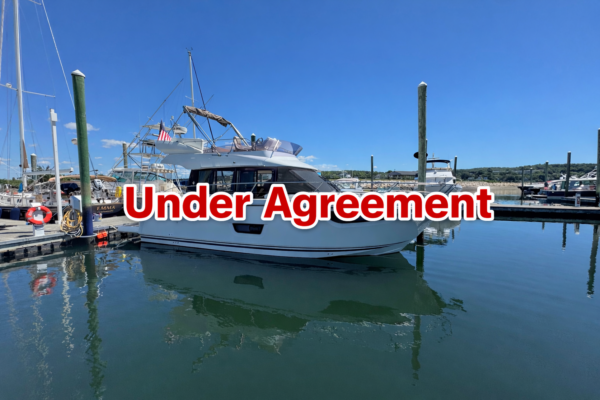
Take this Jeanneau 37F (pictured). I first got the listing in July 2025. The boat got some decent traffic, then nothing, then around Christmas time two separate buyers emerged. Both (separately) came from out of town, crawled around the boat which was shrink wrapped and on jack stands, and both made offers. The best offer won, and survey will be in a week or so. Splashing the boat will be weather dependent and probably sometime in March. And the buyer is thrilled, not only because it’s a great boat, but now he has his yacht for the coming season and beyond.

As a buyer, this time of the year is a great time to be looking at boats. Not many are doing so because it’s cold, snowy etc, but the good thing is if you’re looking now, you don’t have alot of competition. In 6-8 weeks there will be many more lookers who will be competing with you to find boats. This will impact inventory and also drive prices up.

If you’re thinking of selling your boat, don’t wait until the spring. We can get the listing up using older pictures if necessary (we’d update them as soon as the shrinkwrap comes off), list the equipment and upgrades and get her out there in the market for buyers to look at. If you’re thinking about selling and want to learn more, let me know.

Sometimes buying a yacht is really hard! 600 259 Dave Bennett

Sometimes buying a yacht is really hard!

This is a tale of a bumpy boat brokerage sales cycle that no doubt we can all learn from in some way.  I would be interested in comments from  super experienced yacht brokers.  The names, locations and boat types have been changed to protect the innocent. In October 2024 I helped "Joe" sell his 40’ sailboat which was kept in Rhode Island.  It was one of the easiest brokerage transactions I’d ever been a part of as a broker. ...
Looking back on the 2025 Sailboat Market Split: What Buyers and Sellers Need to Know Moving Forward 600 259 Dave Bennett

Looking back on the 2025 Sailboat Market Split: What Buyers and Sellers Need to Know Moving Forward

And why the “boomer-dump collapse” thing is only half the story. A video by "Everyday Sailing" showed up on one of my news feeds about the current state of the cruising sailboat market.  It is well done and according to my more experienced yacht broker colleagues, it’s right on the mark.  I thought I would summarize their findings/observations in this post.  I’ll share a link to the video at the end of this post. So, 2025 in my opinion was kind of a weird year for the sailboat buying/selling...
U.S. Buyer Purchases Yacht in Spain, Part II: Survey Options & Logistics 600 259 Dave Bennett

U.S. Buyer Purchases Yacht in Spain, Part II: Survey Options & Logistics

Note that this story was originally published by John Burnham at Rightboat: https://www.rightboat.com/blog/u-s-buyer-purchases-yacht-in-spain-part-ii In Part 1 of this story, we recounted helping a couple search for their next yacht, which led them from the U.S. Northeast to Mallorca, Spain, with broker Charlie Mann’s help. There, they put down a deposit on a Hoek-designed 56-foot sloop in early January, 2025. Boat markets at this time of year were obviously slow in New England. Thankfully,...
U.S. Buyer Purchases a Yacht in Spain, Part I: The Search 600 259 Dave Bennett

U.S. Buyer Purchases a Yacht in Spain, Part I: The Search

Purchasing a yacht in the U.S. is an intricate process, with no two transactions the same, but when you’re ready to buy a yacht overseas,...
Why use a yacht broker? Part II 600 259 Dave Bennett

Why use a yacht broker? Part II

Your time is valuable. Do you want to be dealing with this stuff? Let’s talk about why it is worth using a broker to the majority of...
Why use a Yacht Broker? Part 1. 600 259 Dave Bennett

Why use a Yacht Broker? Part 1.

What a FSBO sign might look like Like most yacht brokers, at Latitude  we get a lot of our leads by people calling us or emailing us off...
Looking at a boat but questioning it’s engine hours? 600 259 Dave Bennett

Looking at a boat but questioning it’s engine hours?

Sometime ago I listed a 20 year something sailboat that was a major brand, super clean, and immediately the listing started attracting...